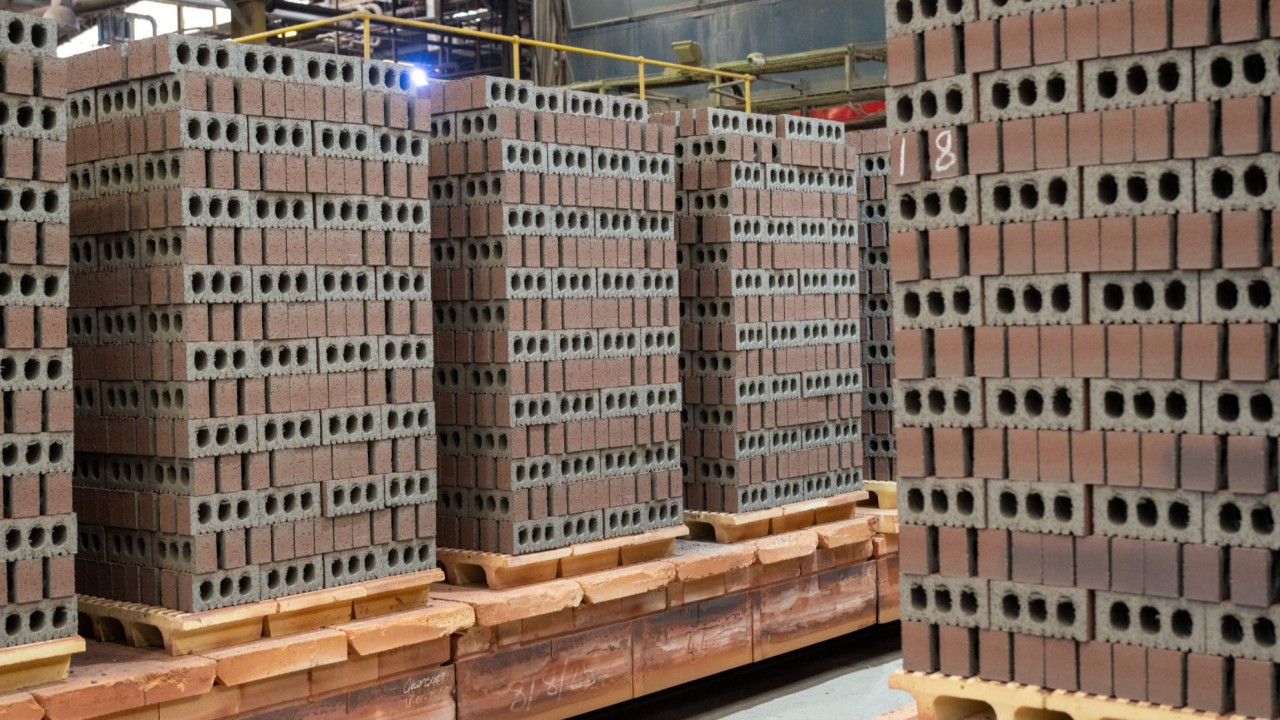
We had a number of discussions at Clerkenwell Design Week in May with Architects, Consultants and Contractors who are totally unaware of what is happening in the brick industry.
Brick has a huge amount going for it – design flexibility, durability, minimal maintenance, potential for re-use – but the big issue the industry has been grappling with is the carbon intensive firing process. Huge leaps have been made in recent years, and the embodied energy has been reduced significantly through optimising existing processes.
Ibstock Plc‘s pathfinder at their Atlas factory showed that with improvements in industrial process, 50% savings in carbon are possible from existing gas fired plants.
Vandersanden took a different approach and re-engineered brick manufacture using other materials with their Carbon sequestering ‘Pirrouet’ range.
Michelmersh Brick Holdings PLC proved the concept of firing with hydrogen in industrial trials.
There are a number of factories in Europe and Australia now firing with Biogas which can reduce emissions by between 30-60%. Others are piloting electric kilns fired with renewable energy and a notable factory in Austria, again owned by Wienerberger, uses the nearby hydro-electric to fire Porotherm UK– a zero carbon firing.
The reason we should be talking about this is that it offers an industry level solution for a mass change in the embodied carbon of one of the most versatile and durable façade products in the market.
A lot of attention is given to ‘new’ products that offer the hope of revolution – and that is a good thing as innovation should be encouraged – but the quiet evolution of existing products cannot be ignored as it has the potential for a much bigger impact and it isn’t getting the attention it deserves.
“Wienerberger says testing through a DESNZ-funded, cross-industry research program led by Ceramics UK provided confidence that the strength, appearance, and wider technical performance of the clay bricks will remain unchanged. That is not a small detail, because sustainability cannot come with a weaker wall.”
Press report here: The United Kingdom fires up the first commercial hydrogen-powered brick factory: the date is set, and the industrial shift feels like the start of a “new era”